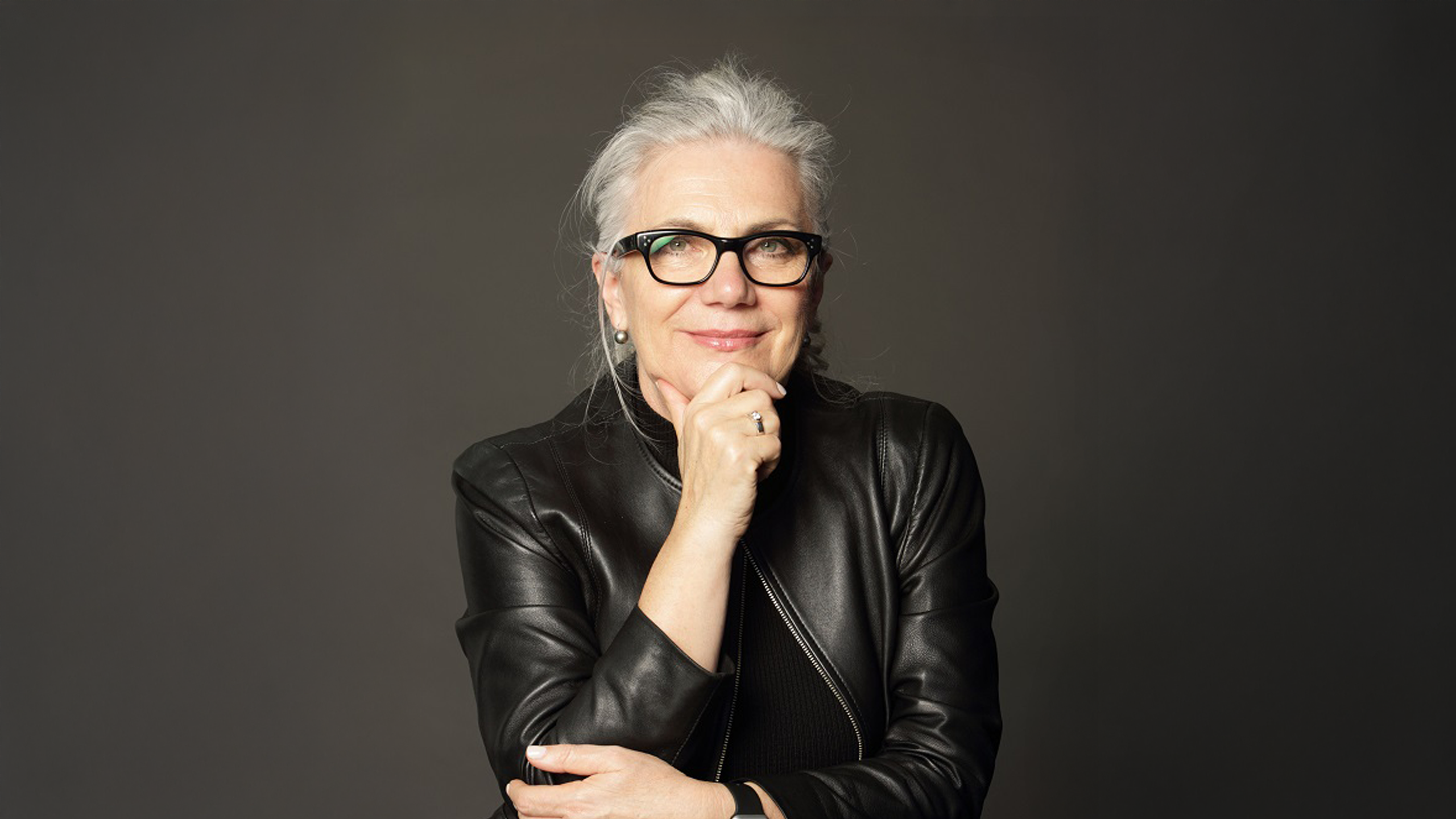
Welcoming Anne Moore as an expert collaborator

We're excited to welcome Anne Moore as an expert collaborator at Snowmelt. Anne joins us as she undertakes her Entrepreneurial PhD at the University of Technology, exploring the intersection of strategic workforce transitions and Artificial Intelligence. Anne brings decades of experience as an academic, successful entrepreneur, and thought leader in human capital, the future of work, and complex systems. We sat down with her to ask a few questions as she joins us.
Anne, could you tell us a little about yourself?
I think of myself as a recidivist entrepreneur in that I haven't learned my lessons the first few times round. So, I'm back on the merry-go-round. I'm delighted to be here and to share with you my experiences and perspectives on the world that I'm hoping align nicely with what Snowmelt is all about.
Can you tell me a little bit about your journey and what's brought you into the work you're doing today?
I love this question. What's brought me here is fundamentally I think of myself as a curious being and about four decades ago I pulled a thread and that thread has led me to where I am today and that's been a really rich seam. I've worked in learning and development. I've followed the rise if you like, the rise and rise of how we treat individuals and learning inside of organisations. So I have a very deep, in fact lifelong, commitment to professional and personal development and growth and I think that's fundamentally what's brought me to where I am today, which is being enrolled in an entrepreneurial PhD program that is looking at how we address the future of work. What skills, what models, etc. do we need to prepare ourselves better for the future? So, it's an enduring theme across decades.
As you look at it today, what would you say are the biggest challenges and opportunities that are arising?
So, I think that the way that I would consolidate this, is thinking that what we're seeing is a broadening gap between an individual's perceptions of their ability to cope and deal with change and what's perceived as the external drivers and pressures that are exerting themselves. So that is an area where I see the most friction and the most tension. It's the alignment of the internal and the external. And when we view internal and external, I see that as being nested. So we could be talking about an individual level. We could be talking about teams. We could be talking about organisations. We could be talking about society.
So how do we resolve the tension that once resolved or working towards resolution ironically brings about a level of stability and security. So once we have a fit between the internal and external dynamics of whatever's going on at whatever level we can approach it with more confidence and a greater sense of stability regardless of what that environment looks like.
And are there any particular models and technologies that you're seeing that are particularly useful?
I have a deep commitment to the idea of complexity because I see it all around. I love the idea of agency. I love the idea of how we socialise and interact, what the relationships are, the relational dynamics if you like, of individuals inside of complex systems, which is all of us in every situation basically. So it's quite broad, but I'm particularly interested in how that plays out at work.
How does systemic design fit into how some of that shows up at work?
So what I love particularly about the design work here is that it allows us to view what I call a whole of picture. It allows us to understand all of the elements that make up complex environments. And rather than treat them as independent or isolated components, systems design allows us to view the interdependencies of all of the factors that we can aggregate or identify and then aggregate as being part of issues and challenges and opportunities and possibilities that we want to explore. So it's that lens, to me it brings a forgive me for saying this but a systems approach - it removes the randomness and the ad hoc nature of wanting to delve directly in a linear fashion from problem to solution. It gives us a comprehensive and holistic view of and a replicable view of what might be going on. And I think therefore leading to better possibilities and solutions.
From your experience benefiting from all of that systems thinking and design work, what does meaningful systems change actually require? and where does that fall over?
It's a great question. I think it sits within several elements. It sits within structure. It sits within governance. It sits within org design. And if I was to give you an example there, we may be excluding using traditional models of approaching this or conventional models. We might be excluding stakeholders that have very vested interest or even expertise and experience in solving certain problems that are otherwise overlooked because of simple factors like structure and hierarchy.
So a fundamental element of complexity and solution building is agency and how do we unlock that and I see systems design as a way of doing that. So what I'm suggesting is that when we operate in corridors and hierarchies there’s stuff we're going to miss. So I love the realistic and grounded view that we can bring when we look at things from the perspective that you guys are adept at doing.
Is there anything else that excites you about I guess the systems but also the design-led part of the practice?
I'm excited about offering up new and novel, if that's not a tortology, ways of approaching problems and challenges. It's not just that. Its ways of approaching as I said possibilities and opportunities and what I'm excited about is the unlocking of that in a collaborative way. It's the process of not necessarily guiding but walking alongside of people basically. I'm really excited by that.
You have been using the language of agency, can you say more about this?
I'm also interested in what gets in the way of agency. When I look at great fields of research in this area, you know running down rabbit holes regularly and back up again looking for another one almost immediately. I'm really interested in what the constraints are that we place upon preventing agency. And a lot of the times it's will, it’s how far are we prepared to give everybody who's playing a role in a problem or a solution the opportunity to participate in that?
How often or how do we exclude significant parties or actors in creating solutions simply by virtue of the structures or the governance that we might have in place. So breaking that open is part of the rat bag in me. It's a gentle defiance, is how I describe it.
What do you want to explore most in the intersection between your work and ours?
Look, I think there's the reason why I was so excited about the work that you're doing and have been since the get-go is that I saw a natural alignment and almost a cohesion where together we create a very coherent story because with my background in human capital and psychology and your background in design and systems, I think that I can't even imagine a scenario where all of those things don't come together for the best sorts of outcomes.
The other thing that I wanted to mention up front is in those four decades of working around growth and development at every level across sectors, what I've recognized is that as one of my few strengths and attributes or superpowers is that I'm a pattern maker. I recognize patterns. So, I'm really excited at the work that you do in pattern recognition and systems approaches. I'm really excited about that. I think that our world views are similar, perhaps I hope not identical otherwise it would just be replication. So, we need a little bit of variance and deviation from the norms if you like. I think we have that - that's talking very technically. But it's the possibility of bringing together all of the good things about the work that you do and the work that I've done and the work that we both see of value moving forward and how we do that in collaboration that really excites me.
I think that what we've both touched on there, is that we're together about sense-making. How do we take in all of the factors and elements that are going to help us understand, because that's directly related to meaning and purpose. So if we can help unlock that in a series of engagements, collaborations, co-creation, then I think that's pretty important and satisfying work.
Learn more
- Read Anne's bio
- Watch Anne's 3min research pitch
- Watch Anne speaking on SBS Insight
- Read Anne’s Sydney Morning Herald article ‘As a woman over 50, I was told I was the wrong age and gender to enter tech’

Related articles


